

Mansion Security in 2026: Protecting Your Investment Without the “Scam Business”
When you build a mansion in the village—especially if you used your own hard-earned cash and avoided the banks—you feel a sense of pride. But that pride comes with a new kind of stress. When you are away in Gauteng, Polokwane, or overseas, the “Village Anxiety” kicks in. You wonder: Is the house okay? Is the solar still on the roof? Did the rain damage the new ceiling?
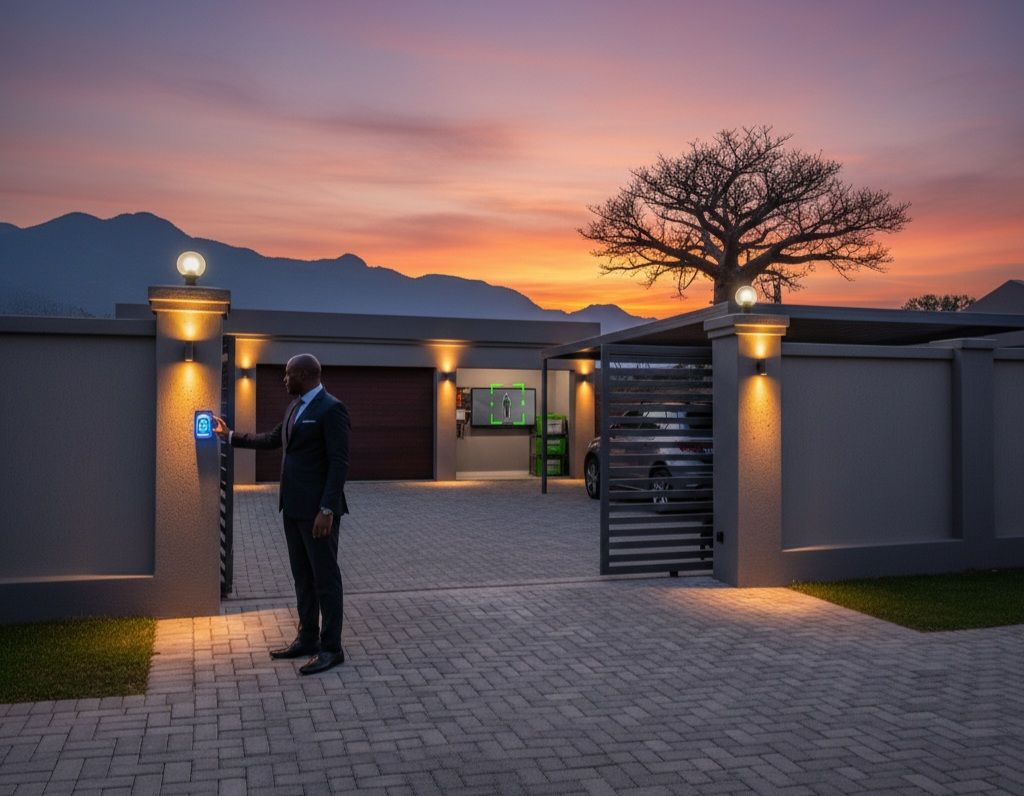
In “Big 2026,” security isn’t just about putting up a tall wall and a loud alarm. It’s about navigating a world where people will try to sell you “protection” that often feels like a scam. From insurance premiums that feel like “rent” to government regulations that feel like a “tax on independence,” here is the real talk on how to protect your castle and your peace of mind.
The Insurance Question: Protection or “Rent”?
Let’s keep it a buck: in our communities, many of us build our houses with “cash in hand.” We buy the bricks, we pay the builders, and we own the keys 100%. So, when an insurance company asks for R1,500 to R3,000 every month to “cover” the house, it feels like you are paying rent on a house you already finished paying for. To many, insurance feels like a scam business.
The “Replacement Value” Reality:
If you choose to “self-insure” (meaning you save your own emergency fund instead of paying a premium), you need to understand the 2026 math. Building costs in South Africa have surged.
- The Cost: For a luxury mansion in 2026, building costs range from R15,000 to R25,000 per square meter depending on your finishes.
- The Risk: If a lightning strike or a fire hits your 400sqm mansion, it could cost R8 million to R10 million to rebuild from scratch.
- The “Kings and Queens” Strategy: If you decide to skip insurance, you must be your own Quality Controller. You cannot afford to cut corners on the “invisible” things. Ensure your roof is tied down for 120km/h winds and your electrical work is done by a Master Electrician. In 2026, if you build it right, you aren’t just building a house—you are building your own insurance policy.
CCTV: AI-Powered “Remote Eyes” for Peace of Mind
In 2026, “blind” security is no longer enough. You don’t just want an alarm that rings; you want to see who is making it ring. To calm your nerves while you are far away, you need a dual-layer system.
- Why it matters: In the village, internet can be unstable. A traditional NVR works 24/7, recording even if the Wi-Fi is down.
- AI Human Detection: In 2026, we don’t settle for basic motion detection. You want AI Analytics (AcuSense). This tech can tell the difference between a village dog walking past and a human standing at your gate. Your phone should only buzz when it matters.
Layer 2: The Wi-Fi “Cloud” Eye:
Apps like Hik-Connect or Ring give you that “Live View” while you are at work.
- The “Nerve Calmer”: Being able to open your phone at 11:00 PM and see your yard perfectly lit up, your gate closed, and your car safe in the carport is what lets you sleep at night.
- The Subscription Trap: Be careful with brands like Ring. They often require a monthly fee just to see your own recorded footage. For a 2026 mansion, a one-time investment in a high-quality NVR system is a much smarter financial move than paying “digital rent” forever.
The Solar “Paperwork” Trap: The March 2026 Deadline
As we move into 2026, the government has officially cracked down on independent power. By March 2026, all rooftop solar systems in South Africa must be registered with NERSA or your local municipality.
The “Scam” or the Law?:
To many, this feels like a “scam business”—another way to take money from people who are trying to be independent. But there is a real danger here:
- The Fine: Homeowners who fail to register their systems by the deadline face a fine of approximately R6,052.
- The NRS 097-2-1 Standard: To register, your inverter must be on the Approved List (NRS 097-2-1 compliant). If you bought a cheap, “no-name” inverter to save R5,000, you might now find that your system is illegal.
- The Safety CoC: You need a Solar Certificate of Compliance (CoC). In 2026, if your house burns down due to a solar fault and you don’t have this paper, your insurance (if you have it) will pay you zero cents. Even if you don’t believe in insurance, the CoC is your proof that your house is safe for your family to live in.
The Most Powerful Alarm: The Human Element
You can have the most expensive alarm system in Makhado, but if it starts ringing and nobody cares, it’s just noise. In the village, Community is your first and best line of defense.
The Neighbor Strategy:
Your neighbors are the ones who are actually there when you are 400km away. They see the strange car parked outside or the person loitering near your wall.
- Don’t Fight With Your Neighbors: If you have a good relationship with them, they are your unpaid security guards. They will call you the moment something looks wrong.
- The WhatsApp Watch: A small, trusted “Mansion Watch” group with the 3 or 4 closest neighbors is more effective than a R2,000-a-month armed response company. Treat your neighbors with respect; in 2026, a loyal neighbor is worth more than a R50k electric fence.
Biometrics: The End of the “Spare Key” Era
In a 2026 mansion, we are moving away from physical keys.
- The Risk of Keys: Keys can be copied by anyone who has them for 5 minutes. If a builder or a former helper has your key, your security is compromised.
- The Biometric Solution: Fingerprint or Facial Recognition locks are now affordable and reliable. You can program a helper’s fingerprint to only work on Mondays and Wednesdays. The moment they stop working for you, you delete the print. No more changing locks. It’s the ultimate “King and Queen” level of control over your castle.
The “Invisible” Security: Lighting and Landscaping
Security isn’t just about gates; it’s about Psychology.
- The “Glow”: A well-lit house is a hard target. Use Day/Night sensors on your pillar lights so the house looks occupied even when you are away.
- Smart Landscaping: Avoid planting thick bushes near your gate or windows where someone can hide. Keep it “Simple and Beautiful”—clear lines of sight make your cameras much more effective.
The Valuation Bonus: R300k and Beyond
Does a “Secure” home actually sell for more? In the 2026 market, security and independence (Solar/Borehole) are the top two requirements for luxury buyers.
- The Tech Premium: A house that is “ready for anything”—with AI cameras, a registered solar system, and biometric locks—can command a premium of R300,000 to R400,000 over a “standard” house.
- The Investment Logic: You aren’t just spending money on cameras; you are increasing the “paper value” of your asset. Security is a lifestyle, but it’s also a financial strategy.
Conclusion: Real Security is Peace of Mind
At the end of the day, security isn’t about how much you pay a “scam” insurance business or how many papers you have in a drawer. It’s about smart tech, solid construction, and good people. Install your AI-driven cameras so you can check in on your phone from the office. Ensure your solar is NRS 097 compliant so you don’t get hit by the March 2026 fines. Most importantly, keep your neighbors close and your family safe. That is how you live like a King or Queen in 2026—safe, relaxed, and truly in control of your legacy.
This guide reflects personal experience and current 2026 South African regulations; it is not professional legal or financial advice.