

Off-Grid Sovereignty: The 2026 Guide to Solar, Boreholes, and “Dignity” in the Village
In the villages around Makhado, there is a new definition of luxury. It isn’t just about having a big house; it’s about having a house that works when the rest of the world stops. We’ve all felt that heat in December when the power goes off and the water taps run dry. That isn’t just a “service delivery” issue—it’s a dignity issue.
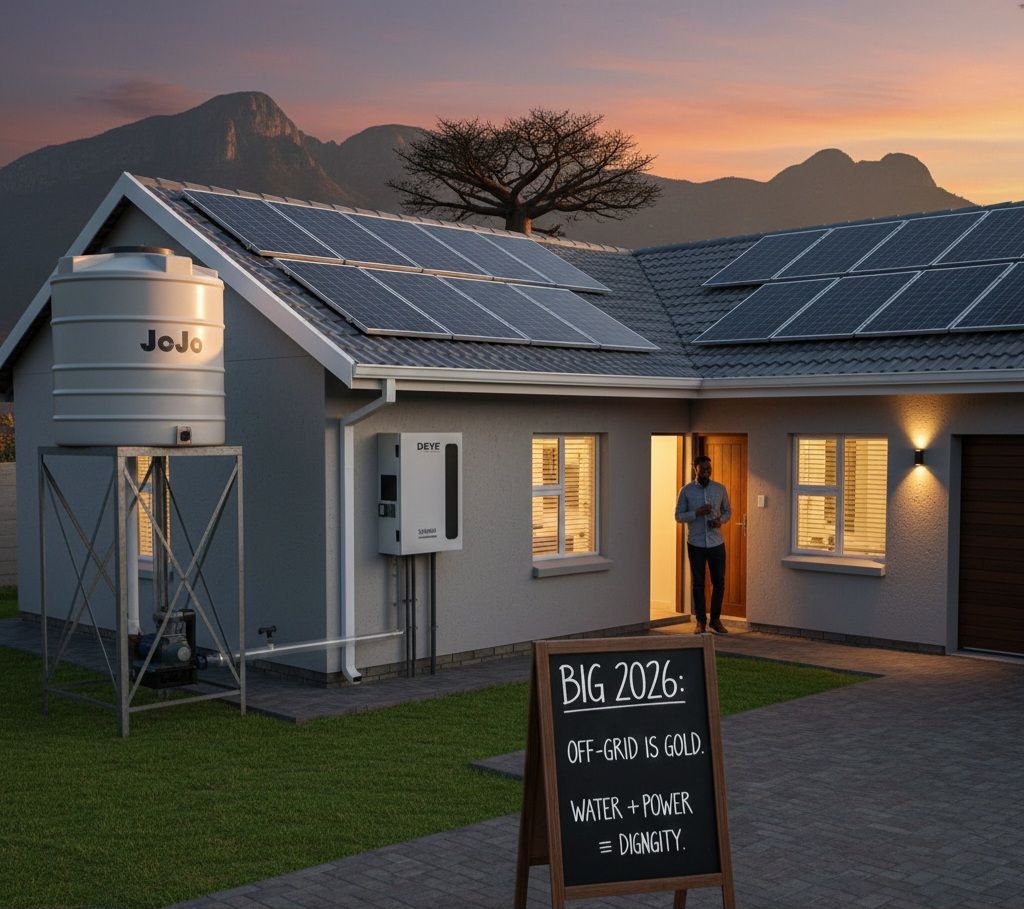
Building a “Future-Proof” home in “Big 2026” means investing in independence. I’ve spent the money, made the mistakes, and seen the results. If you want to stop checking the Loadshedding app and start living like a king, here is how you spend your R200k+ on the “Engine Room” of your home.
The Solar Choice: Why “Cheap” is an Expensive Mistake
When I started my solar journey, my teacher told me something I never forgot: “If you pick cheap things, don’t be surprised when they don’t last.” In our area, where the sun is brutal and the grid is unstable, your inverter is the heart of your home.
- The Inverter: I highly recommend high-quality brands like Deye or Sunsynk. Yes, they are more expensive than the “no-name” brands you find in some local hardwares, but they come with warranties and smart apps that actually work.
- The Battery (The 10kWh Standard): Many people start with a 5.1kWh battery to save money. Hell nah! I chose a 10kWh Lithium (LiFePO4) battery. Why? Because it’s twice as fast to charge and gives you the “buffer” you need to run the heavy stuff. A 5.1kWh battery is great for lights and a TV, but if you want to live “normally,” you need the 10kWh “big boy” to handle the night-time load.
The Borehole Reality: Drilling for Freedom
People think once you drill, the water is free. But the “Entry Fee” for a borehole in the Vhembe district is significant. Depending on the company and the depth (if you go deep to hit the good veins), you are looking at around R130,000 for a full, professional setup including drilling, casing, and the pump.
- The Pump: We use a 1.1kW pressure pump. While many suggest a 0.75kW, the 1.1kW is slightly better—it gives you that “hotel pressure” in the shower, even if someone is washing dishes in the kitchen at the same time.
- The Filtration: Our water has a lot of lime-scale. To protect your expensive gold taps and your geyser, an Inline Filter is compulsory. It’s a small investment that saves you thousands in plumbing repairs later.
Hot Water: Solar Geysers vs. Everything Else
For hot water, we went with a High-Pressure Solar Geyser. Why? Because in Limpopo, the sun is a free resource. Using electricity to heat water is a waste of your battery’s “juice.” A solar geyser keeps your water hot and your electricity bill at zero. Just make sure it’s a high-pressure system so your 1.1kW pump can give you a proper “mansion” shower experience.
The “Vibe” During Loadshedding
There is a specific feeling when the whole village goes pitch black at 8:00 PM, but your house is still glowing. For me, it’s the Fridge. It sounds funny, but hearing your fridge hum during a blackout makes you feel a deep sense of peace. You know your food isn’t spoiling, your beer is cold, and your Wi-Fi is still running. That is what we call “Residential Dignity.”
Maintenance: The “Red Dust” Routine
You can have the best Monocrystalline panels in the world, but if they are covered in Makhado dust, they are useless.
My Advice: I clean my panels twice a month. If you feel they are dirty, clean them. Use plain water and a soft brush—no harsh soaps. A clean panel produces up to 20% more power than a dusty one.
The “Cheap” Battery Trap
I’ve seen neighbors buy “Cheap” lead-acid or low-quality lithium batteries. They feel happy because they saved R10,000, but two years later, the battery is “dead” and won’t hold a charge for more than 30 minutes. Buying cheap solar is an expensive mistake. If you can’t afford the 10kWh high-quality battery yet, wait and save. Don’t throw your money away on a “quick fix” that will leave you in the dark by 2028.
The ROI: Is it Worth It?
People ask me if this R200k+ investment actually adds value. In my experience, my home’s value has increased by roughly R208,000 just because of the solar and water independence. If I sold the house today, it would sell 10x faster than a house that relies on the grid.
Conclusion: Day 1 Advice
If I could go back to Day 1 of my building project, I would tell myself: Focus on the “Engine” before the “Paint.” We spend so much money on fancy tiles and gates, but a house without water and power is just a beautiful cave. Invest in your independence, buy high quality, and enjoy the peace of mind that comes with being your own municipality.
This article reflects personal experience and is not professional engineering or financial advice.