

The Ultimate Guide to Building a ‘Future-Proof’ House in Limpopo: 5 Things I Wish I Knew Before the Foundation Was Poured
In the villages and towns around the Makhado Local Municipality, building a home is more than just a construction project; it is a lifetime investment. Whether you are building in a new extension or on family land under the Davhana Traditional Authority, the decisions you make during the “brick and mortar” phase will determine your comfort for the next thirty years. Today, building a house isn’t just about four walls and a roof—it’s about creating a “future-proof” sanctuary that can handle the Limpopo heat, the rising cost of electricity, and the need for modern security.
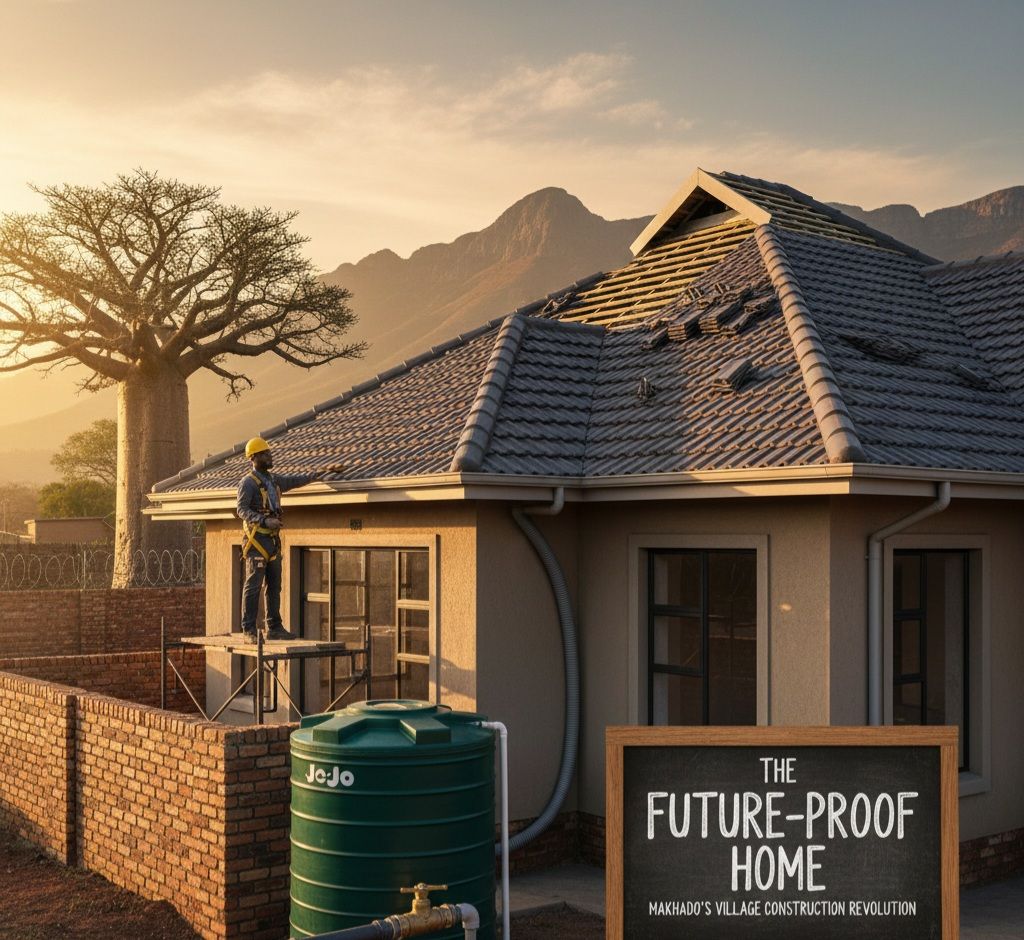
After observing many projects in our district—from the massive “village mansions” in Mpheni to the new developments in Elim—I’ve realized that the most expensive mistakes aren’t made by choosing the wrong paint color. They are made in the first few weeks of construction. Here is the unfiltered reality of modern home building in 2026.
Land Under a Chief: The Davhana Economy
One of the unique aspects of building in our area is the land structure. Many of us build on land held by a Traditional Authority, such as the Davhana family, even though we fall under the broader Makhado Municipality. The “entry fee” for this land is often much cheaper than buying a suburban title-deed stand in Louis Trichardt, but it comes with a different set of financial rules.
Because you aren’t paying millions for the stand, you have more capital to put into the structure itself. This is why we see such “crazy” nice houses rising in Mpheni and surrounding villages. It isn’t necessarily a “competition” between neighbors; it is simply the result of hardworking people who finally have the space and the saved-up cash to build their dream homes. However, because you are building a high-value asset on tribal land, you must ensure your “Permission to Occupy” (PTO) paperwork is solid and your boundaries are verified by the local headman to avoid future disputes.
The Roofing Reality: Why Tiles Are the King of the Village
If you ask any local builder in the Vhembe West district what the most stressful part of the budget is, they won’t say the foundation. They will tell you it’s the roof. In fact, in many modern 4-bedroom designs, the cost of the roofing materials and labor actually exceeds the cost of the entire foundation and the walls up to the ring beam.
When I saw the final quote for a quality tile roof, it was a “cost shock.” My personal advice for anyone starting their foundation today: Save enough for the roof, and then add another 20% on top as a safety net. While IBR (corrugated iron) is faster, I always recommend a tile roof. Tiles stay looking good for decades, they don’t rust in our heavy summer rains, and they give the house that modern “mansion” look. More importantly, they handle the intense Limpopo sun better. Metal roofs can “ping” and pop as they expand in the heat; tiles provide a stable, silent, and thermally efficient shield for your family
Fighting the Limpopo Heat: The South-Facing Window Secret
One of the biggest mistakes new builders make is trying to “capture the sun” by putting all their big windows on the East or West side. In Limpopo, that is a recipe for an oven. The sun moves from East to West, but it leans towards the North. If you put big windows in your lounge on the West side, you will be hit by the “afternoon furnace” from 14:00 to 18:00.
The South-Facing Strategy: Try to place your largest windows on the South side. You still get the natural daylight, but you avoid the direct “laser beam” of the sun heating up your floors. For those who love the “Modern Look,” big glass windows are beautiful and make the house look cool, but you must pair them with wide roof overhangs (eaves). These eaves act like a hat for your house, keeping the summer sun off the glass while letting the light in.
Solar-Ready Wiring: The 2026 Requirement
Planning for the sun is a building requirement in 2026, not an option. I have seen so many beautiful homes in Makhado get “ruined” because the owner decided to get solar two years later and had to drill through expensive plaster and tiles to run cables.
While your walls are still open and the electrician is piping the house, tell them to leave dedicated 25mm or 32mm conduits (pipes) from the roof space down to where your distribution board (DB) will be. This costs almost nothing now but saves you thousands later. To find a certified electrician who understands these modern “Solar-Ready” requirements, you often have to look toward the more established contractors in Louis Trichardt (Makhado town). It is worth the drive to ensure your house isn’t just “wired” but is “engineered” for the future.
Water Independence: JoJo Tanks and the “Clean Water” Myth
In our area, we cannot always rely on municipal water. Many households are moving toward total independence by installing JoJo tanks. While a borehole is the ultimate “power move,” it isn’t always necessary if you manage your storage well.
A common question is whether to collect rainwater from the roof. In my opinion, the water falling from the roof isn’t always clean or healthy for drinking. However, during a water crisis, it is a lifesaver for washing clothes and sheets. When you build, ensure your plumber installs a “three-way valve” system. This allows you to flip a switch and pull water from the municipal line when it’s working, or from your tank when the municipality is dry. If you forget this during the build, you’ll end up with ugly pipes running down the outside of your beautiful new walls.
Bricks and Cement: Why Quality Wins Over “Cheap”
When it comes to bricks, you will be faced with a choice: the “Maxi Brick” or the “Stock Brick.” While Maxi bricks are popular for saving time, most people in our area still prefer Stock Bricks. Building a home is a long-term project, and you don’t want unnecessary trouble ten years down the line because you used low-quality materials.
For the foundation and structural walls, buy from a reputable supplier in Makhado or Elim. You want cement that is consistent and bricks that won’t crumble. Supporting local village brick-makers is great for garden walls or non-structural filling, but for the “bones” of your house, go for the best quality you can afford.
The “Stoep” Culture: The Most Important Room
In the heat of Limpopo, the Veranda (Stoep) is where life happens. When designing your home, don’t treat the porch as an afterthought. Build a large, shaded area where you can sit in the evening. This isn’t just for luxury; it’s a practical space to escape the indoor heat and enjoy the village breeze. It’s also the perfect place to keep your firewood for those nights when the power is out and you need the “Firewood Hack” to cook or warm water.
Security: The Solid Wall vs. The Fence
In the villages around Makhado, privacy and security go hand-in-hand. While a clear-view fence allows you to see the mountains, most homeowners are opting for a solid 2-meter brick boundary wall. A wall is better than a fence because it provides a total visual barrier. When you combine a high wall with a neat electric fence on top and solar-powered Wi-Fi cameras, your home becomes a fortress that still looks like a mansion. It is about creating a “Smart Wall” that protects your investment without making it look like a prison.
Conclusion: The Reward of Proper Planning
Building a house in 2026 is a challenge, but if you prioritize your roofing quality, manage your window orientation, and pre-wire for solar, you will end up with an asset that grows in value. Don’t let the initial “cost shocks” of the foundation or the roof stop you. Proper planning is the difference between a house that is a burden and a home that provides freedom. In the Davhana area and across Makhado, we aren’t just building houses; we are building our legacy.
This article reflects personal experience and is not professional architectural or financial advice.