

💰 The 15% Dividend: How Makhado’s 2025 Tariff Hike Was My Solar “Payday”
In July 2025, while most of the country was debating national politics, residents of the Makhado Local Municipality received a sobering wake-up call: a confirmed 15.62% electricity tariff increase. For many households in our villages—from Elim to Mpheni—this wasn’t just a number on a spreadsheet; it was the moment that managing energy costs became a permanent financial priority. For those of us who invested in solar, this hike didn’t feel like a threat—it felt like a dividend.
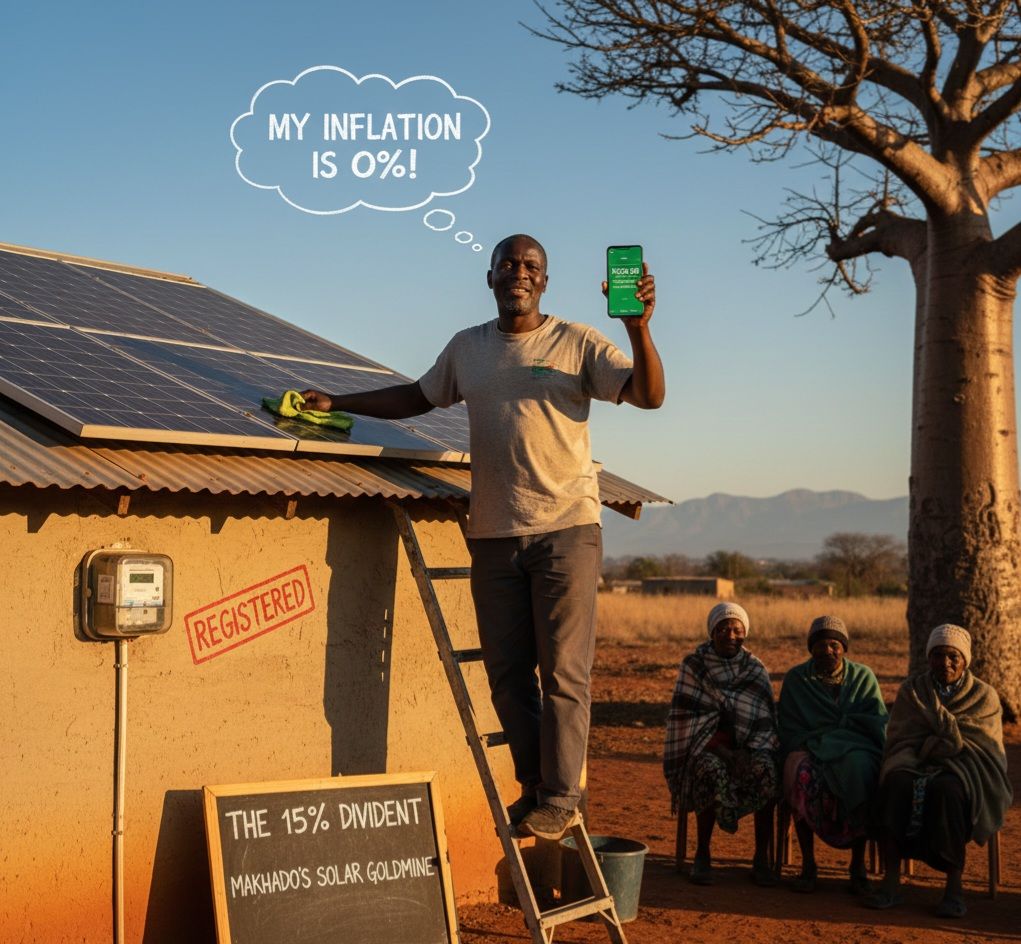
It was the moment my R150,000 investment officially stopped being a “luxury” and became a strategic financial move. My reaction to the news was clear: the cost of energy is on a trajectory where we must take personal responsibility for our supply. If you are sitting on the fence about solar in our district, here is the unfiltered financial reality of 2026.
The Death of the “Cheap” Voucher: R300 vs. The 2026 Reality
We all remember when a R300 electricity voucher lasted a decent while. But under the new 2025/2026 Makhado tariffs, the purchasing power of that R300 is shifting. In our district, the Block 2 rate (51–350 kWh) has climbed significantly. This means your R300 now only buys about 121 units. For a family with a fridge, a TV, and a few phones, 121 units is a short-term supply that barely covers a standard household’s needs.
Before my solar installation, I used to buy my electricity all at once. Now, I spend less than R200 on “top-up” units via my Capitec app. That R200 is just a safety net for those rare weeks when the Limpopo clouds are particularly heavy. The convenience of Capitec means I no longer have to visit nearby shops or find an informal vendor that is open late just to keep my lights on. Every hike proves that my decision to save for months rather than taking a risky loan was the right path. Knowing that my personal energy costs are stabilized while standard rates rise annually by 15% is a powerful financial cushion.
The Limpopo “Sun-Belt” Advantage: Why Winter Didn’t Break My Bank
One of the biggest solar myths in South Africa is that solar fails during the winter. In the southern regions, that might be true. But here in the Vhembe West district, we live in a Solar Goldmine. Even in the heart of winter, the Makhado sun is active by 07:00. I remember my school days at Ozias Davhana Secondary School in Mpheni Village; we used to stand near the sun-warmed walls just to keep the morning chill away. Today, that same intense radiation is hitting my panels and powering my home.
During winter, my battery handles the “Kettle Test” perfectly. Even on a cold June morning, the system doesn’t struggle with the 2000W pull of a boiling kettle. Because our winter sun is so consistent, the panels produce massive energy throughout the day. In Limpopo, solar isn’t a seasonal fix; it is a year-round powerhouse. We live in the best province for Solar ROI (Return on Investment), and it’s time we started acting like it.
The R6,052 Fine: The Importance of Compliance
While the savings are great, the administrative side is a requirement we cannot ignore. I have started the process of registering my system to avoid the R6,052 fine mandated for March 2026. The paperwork and the process with the local municipal offices require patience, and it can be tempting to give up.
However, registration is a necessary step for safety and legality. It ensures your system meets the SANS 10142-1 safety standards. If your house has a metal roof (common in our villages), proper earthing is non-negotiable. It is vital to work with certified installers rather than unverified handymen; the risk of a technical failure or a municipal fine could easily outweigh your electricity savings.
Maintenance and Efficiency: The Reality of Dust
Makhado is dusty, but I don’t follow the “everyday cleaning” myth. While some believe dust dramatically “steals” energy, I’ve found that a practical schedule is best. I recommend cleaning your panels every two weeks if you live near a busy road. A simple bucket of water and a soft cloth is all you need. In our district, keeping the panels clear of heavy red dust is a simple way to ensure your system continues to provide its maximum “dividend.”
The “90s People” and the Cultural Shift
One of the most interesting parts of having solar in the village is the cultural response. I’ve seen the “90s People” (our elders) sitting in the dark even when the battery is nearly full. They often worry about using energy during a fault, fearing it will run out. There is a deep-seated habit of conservation that we have to gently update with technical facts. I tell them that the battery is there for their comfort and that the sun will replenish it tomorrow, but for many, the habit of “saving for a dark day” remains strong.
The New Payback Reality
Financial experts used to say it takes a decade for solar to pay for itself. In 2026, with 15.62% annual hikes, that period has been dramatically reduced. Every hike is effectively an increase in the value of the energy your roof produces. While the cost of living rises for others, solar owners have successfully “hedged” their energy costs against future inflation.
My Advice: Save, Don’t Borrow
My advice to my neighbors is to save for months to afford your system. Taking a high-interest loan for solar can be a financial trap if the repayments exceed your original electricity bill. Start small:
- Phase 1: Buy two high-quality panels and a small inverter for essential devices.Phase 2: Put your monthly electricity savings into a dedicated fund.
- Phase 3: Purchase your Lithium battery only once you have the capital.
Conclusion: The Cost of Waiting
In the Makhado Local Municipality, the cost of electricity has effectively doubled in the last 5 years. If that trend continues, waiting to install solar is effectively a decision to pay more for the same service. Every day you wait is a day you are funding an aging grid instead of your own energy future. In 2026, solar is a practical necessity for financial stability. It’s about making sure that when the next hike comes, you are the one sitting in the sun, smiling at your Capitec app.
This article reflects personal experience and is not financial or electrical advice.