

👔 More Than Megawatts: How Solar Restored My Dignity in the Village
When we talk about solar energy in the Makhado Local Municipality, we often get stuck on technical terms: inverters, lithium-ion, and kilowatts. But for those of us living in the village, the real value of solar is much simpler than a spec sheet. It’s about the small moments of dignity that the grid used to take away from us every single day.
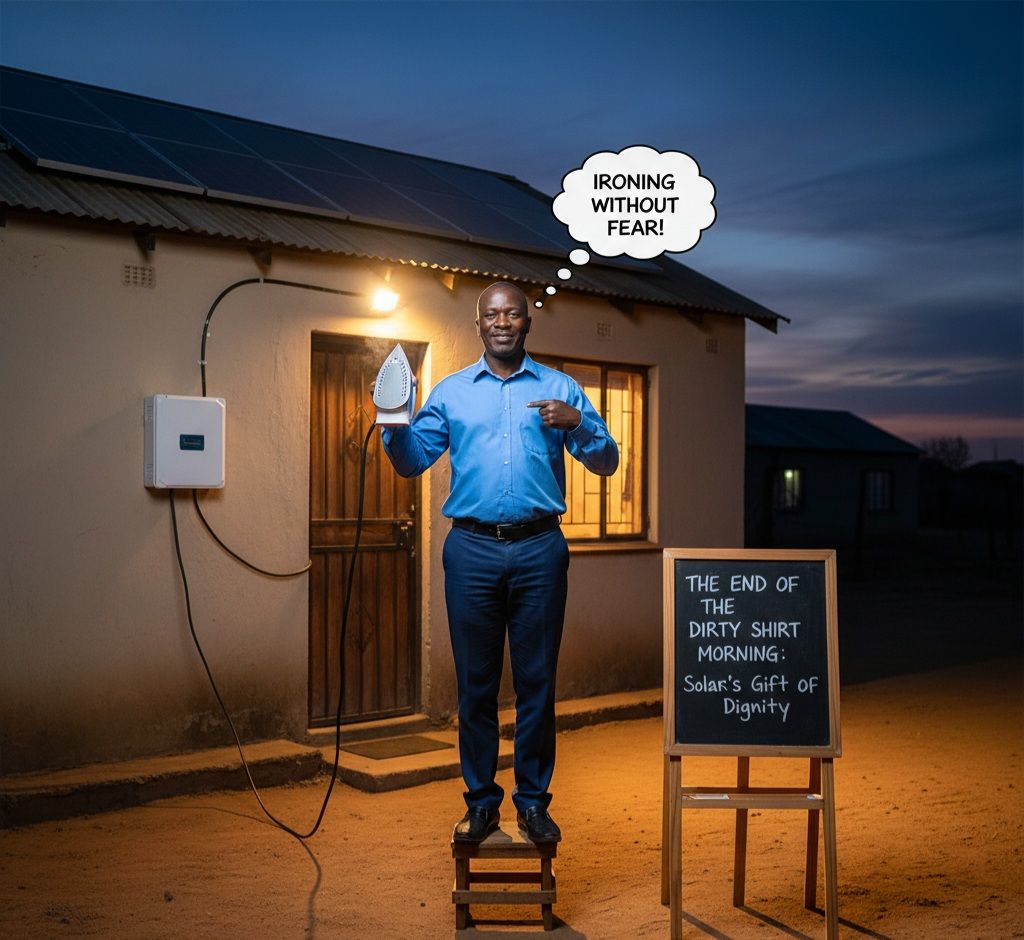
It’s the ability to iron your shirt for a trip when the grid is dead. It’s the ability to charge your phone when it’s flat. It’s the peace of mind knowing you don’t have to go sleep without bathing just because the “lights” are gone. After making the switch, my daily life didn’t just get cheaper; it transformed into something stable. I moved from being a victim of the schedule to being the owner of my time.
The Elim Mall Standard: Reclaiming the “Clean Look”
We’ve all had that specific morning. You have a plan to go to Elim Mall at 13:00. On a Saturday, Elim Mall is the heart of the area; it’s full of people, friends, and neighbors. You wouldn’t want to be seen there with wrinkled clothes. The same applies to Sunday church services at 13:00. You want to walk into that building feeling presentable and confident. But then—click—the power goes. Load shedding arrives exactly when you needed the iron most.
Before my solar setup, that moment was a total disaster. You would stand there in the dark, feeling the heat leave the iron, knowing you only had about thirty seconds of warmth left to “press” an entire shirt. You’d end up wearing wrinkled clothes, feeling self-conscious the whole time you were at the mall or in the pews. It makes you feel like you aren’t in control of your own life. Today, I use my appliances without that nagging fear. Whether it’s a weekday trip to the shops or a Sunday service, my iron works because the sun (or my battery) says so. This isn’t just a convenience; it’s about maintaining a standard of living that isn’t dictated by a failing transformer.
The Neighborhood Charging Hub: A Community of Respect
One of the most rewarding things about having a solar system in the village is how it changes your relationship with your neighbors. In our community, we look out for each other. When the electricity is gone for four hours or more, my house becomes a small destination. We have all felt that specific annoyance when your phone is flat and you realize you have no way to stay in touch with family or check your banking apps.
When neighbors come over, they usually bring their own chargers. We don’t just sit and watch TV; we use that time to have a chat and chill. It becomes a social moment. Being able to keep a neighbor’s phone alive so they have a flashlight at night or can stay in touch with their children is a small but powerful way that solar serves the whole street. The people in our village are very respectful of space; nobody comes over too late or makes it a burden. It turns an expensive investment into a community service. If someone only has R500, I always recommend they start with a high-capacity power bank first. In 2026, a phone is your most important tool—it’s your bank, your news, and your flashlight all in one.
The Summer Sleep: Defeating the Limpopo Heat
While winter is about the battle for hot water, the Limpopo summer is a different beast entirely. We know how the heat in Makhado can be—it’s thick, heavy, and it doesn’t always go away when the sun sets. Trying to sleep in a village house without a fan during a February heatwave is a recipe for exhaustion.
I use a Swan Nordic fan, and I leave it on all night during the summer. Interestingly, because a fan uses so little power, it doesn’t even make my battery usage “bad.” My inverter doesn’t beep or struggle; it just hums along quietly. My quality of sleep has improved, and that makes me more productive during the day. Before solar, if load shedding hit at 22:00, you’d spend the night sweating and tossing. Now, I sleep knowing I have power, and that peace of mind is worth more than the savings on the meter.
The Winter Victory and the Firewood Reality
In the winter, the “90s people” (our elders) still rely heavily on the Firewood Hack to boil their water. They don’t think my solar setup is “magic,” but they definitely see how useful it is. While they are outside fighting the cold wind to get a fire going for a bath, I am inside using my kettle.
I still encourage people to have wood on standby for emergencies, but having the choice to stay inside where it’s warm and safe is a major victory. I no longer feel that “disappointed” sinking feeling when the street goes dark. The annoyance of the grid is still there, but the physical struggle for basic hygiene and warmth has been defeated. I stay inside, I stay warm, and I stay clean.
Security and Safety: The Life Space LSF Advantage
Darkness in the village can feel like an invitation for trouble. Even before I had my full system, I invested in Life Space LSF solar lights. These are highly helpful, and I recommend them to everyone in the district. They stay on even when the transformer has a problem or the grid is down for three days. Knowing that my gate and my yard are lit up is a massive boost to my sense of safety.
A bright yard shows that your home is monitored and powered. It’s an invisible guard that never sleeps. Even if you can’t afford a full R150,000 system, spending a few hundred rands on quality solar security lights like the LSF series is the best way to protect your family. It’s about reducing the number of things you have to worry about at night.
Managing the Water: The Borehole Logic
A common question in Makhado is whether to run a borehole pump on solar. As I’ve mentioned, these pumps are heavy on electricity. However, the need to run them on solar is actually rare. As long as you keep your tanks full when the grid is on, you won’t find them empty during standard load shedding. People shouldn’t worry too much about the pump—focus on the lights and the phones first. Solar is about balance; once your essential life (communication and light) is handled, the lack of a pump for a few hours feels like a minor inconvenience rather than a disaster.
The Manual Switch: Reclaiming Control
One thing people need to know is that when the grid goes off, you often have to do things manually to bring your own power back or manage the transition. It’s not always a “magic” invisible switch. But that manual control is exactly what I love. I am no longer a victim of a schedule I didn’t choose.
If I am going somewhere early, I still wake up early to prepare. But if I don’t have to be anywhere, I sleep peacefully knowing the power is there. I’m no longer disappointed by the “click” of the grid going down. I’m just moving forward. Solar has moved me from a life of “waiting for the power” to a life where I have the power.
Conclusion: Why You Should Start Small
To my friends and neighbors in Elim and the wider Makhado area: don’t wait until you have R100,000 to start. I started with security lights and a dream. Buy a reliable brand, even if it’s small. Once you experience that first morning where you can iron your clothes for church during load shedding, you will never want to go back to the old way again. It’s not just about electricity; it’s about your dignity, your time, and your peace of mind.
This article reflects personal experience and is not financial or electrical advice.