

The Makhado Survival Guide: Low-Tech Life Hacks for High-Tech Solar Owners
After spending money on a solar and battery system, the last thing you want is to be constantly worried about power usage. But surviving the reality of power faults—like the three-day transformer failures we sometimes face in the Makhado Local Municipality—requires more than just technology; it requires street-smart life hacks. I’ve tested countless budget tips and strategies over the years. Some are brilliant, simple solutions that save your battery life and sanity. Others are myths that waste your time and, worse, leave you vulnerable when the power crisis hits. Here is my honest, unfiltered review of what works and what fails when trying to survive load shedding and extended outages on a budget.
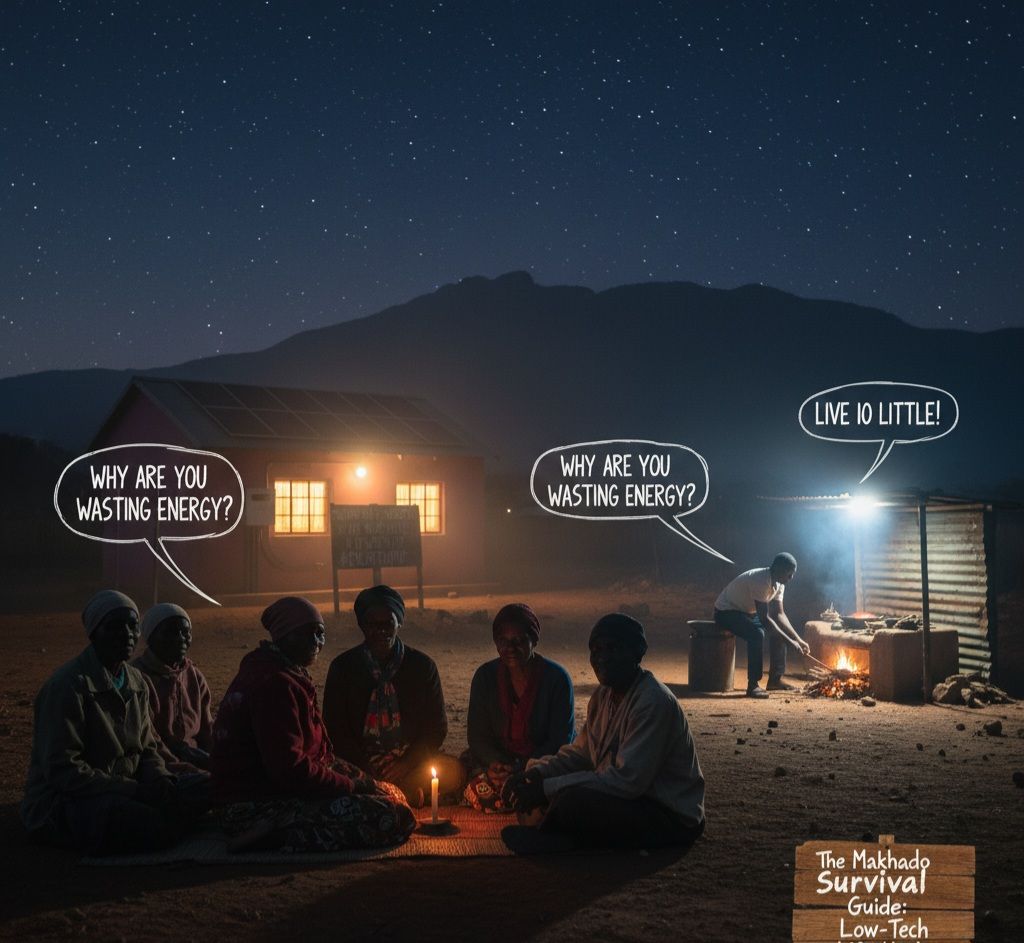
Winner #1: The Kitchen Survival Strategy (The Firewood Hack)
Most load shedding advice assumes you have a gas stove, but many in our community don’t. During a short 3-hour outage, my inverter is fine. But when the power is off for three days due to a transformer fault, running the electric stove is out of the question—it is a guaranteed way to drain the battery entirely. My solution is simple and highly effective: The Firewood Hack.
In 2026, the economics of firewood vs. gas in the village is a major factor. For about R20 to R40, I can buy enough firewood from a local vendor to last my household a full week of crisis management. Compare that to the January 2026 price of LPG gas, which has climbed to over R34 per kg (making a 9kg refill over R300). While gas is fast and convenient, firewood is the “true budget” survival king. This allows us to move all hot water needs (bathing, washing, coffee) and even some basic cooking outside the house. Not only does this save the battery for crucial appliances like the fridge and lights, but cooking outdoors ensures we avoid wood smoke inside the house, which is a huge safety benefit. Even if it starts to rain, a simple iron slab or a piece of corrugated zinc over the fire keeps the hack alive. This low-tech, traditional solution proves far more reliable than any expensive new gadget.
Winner #2: The Connectivity Lifeline (The Router Power Bank)
I have heard many people complain that when electricity goes out, their Wi-Fi goes out too. I use Telkom, and when the power is off for a full four hours, the network towers in our area often fail, meaning no internet and often unstable mobile networks even if the power returns. This is a critical security and communication problem. My winning solution here is not a huge, expensive UPS but a dedicated power bank specifically for the Wi-Fi router.
The small power bank, which often costs less than R1,000, keeps the router running for the full four hours of load shedding. I use the Telkom R630 unlimited plan, which gives me 200GB+ of freedom. While the tower might still fail or slow down when the whole village jumps on it, keeping my own local connection stable is essential for managing my battery and staying informed. In 2026, we all dream of Starlink because it only needs a clear sky and a small bit of power, but until that becomes a budget reality for us, the router power bank is the best way to ensure that when Telkom is down, I can still switch to a backup Vodacom or Cell C SIM and stay connected to the world.
Winner #3: The Safety First Habit (The Meter Box Switch-Off)
This is less a hack and more a vital safety habit, but it is one I recommend every household adopt, especially in areas with unstable power supply like ours. When load shedding starts, my mother always switches off the meter box (the main AC breaker). Why? To avoid the surge damage when the power comes back on. This is a technical move to prevent Grid Swells—those massive spikes of electricity that happen when the grid is re-energized.
When Eskom restores power, the voltage can fluctuate dramatically, causing over-voltages that can severely damage expensive appliances like the TV or the inverter itself. My mother waits for a specific sign—usually seeing the neighbor’s streetlights stay on for a few minutes—before she flips the switch back. Manually switching off the main breaker ensures that unstable electricity cannot enter the house circuit. This simple action, which takes five seconds, protects your entire R60,000 investment. It is easy to forget, but in the Makhado municipality, where grid restoration can be “bumpy,” the cost of forgetting could be a new television or a fried inverter control board.
Failure #1: The “Don’t Open the Fridge” Myth
I often hear the advice: “Don’t open the fridge, and your food will last.” I don’t believe in this as a primary survival hack—it feels like something a parent tells you to stop you from snacking! The reality is that during a standard 3-hour load shedding slot, food will definitely last in the fridge. The fridge itself is well-insulated. However, the true test is the 3-day transformer issue.
During a 72-hour outage, the ice inside the freezer section starts melting, causing the fridge to leak water onto the floor. I constantly had to mop. My “street-smart” fix for this is to keep an old, useless blanket at the bottom of the fridge to soak up the water, though you eventually have to drain the soaked blanket. If you have “ocean food” (seafood) or meat in there, it will start to smell by day two. Relying on “not opening the door” is wishful thinking during a real crisis; you need a proper backup plan, like a deep freezer powered by the inverter or moving essential items to a cooler box with ice.
Failure #2: The Central Power Strip Hassle
Many blogs recommend consolidating all essential devices onto one central power strip so you can switch them all off at once. I find it feels like a total hassle. If you have a battery system, the point is to avoid that level of micromanagement. The strip hack only adds complexity and takes away from the peace of mind you paid for. If you have an inverter, use it! If you are facing a long fault, use power responsibly—like my TV sacrifice—but don’t turn your house into a mess of tangled extension cords just to save a few milliamps.
Failure #3: The LED Lighting Priority
I often see advice to immediately switch all main house lights to low-wattage LED globes to save power. While switching to LED is smart, for those who already use them, it makes almost no difference to the battery’s overall runtime. Lights use so little power (4W to 7W) compared to the fridge or the microwave. I have seen the “90s People” (the elders) in my village sitting in the dark, even though they have solar, because they are terrified of “wasting energy.” They would rather sacrifice their comfort than see the battery percentage drop. I tell them that they can keep the lights on—it’s the one luxury the battery provides with ease—but they eventually say, “we are getting old,” and prefer the darkness. My experience is that lights don’t affect anything; focus your energy savings on high-draw appliances like kettles and heaters instead.
The 2026 Compliance Reality: The R6,052 Fine
While we talk about firewood and blankets, we must also talk about the law. By March 2026, the deadline for solar registration in South Africa is no longer a “future” problem—it is a reality. If you have a grid-connected system in Makhado and you haven’t registered it with NERSA/Eskom, you risk a fine of R6,052. Furthermore, even your firewood cooking must respect the safety of your neighbors. In a 4-room house, smoke management is vital. Always cook in a ventilated, outdoor area to ensure you don’t trade your electricity problem for a respiratory health problem.
The Ultimate Budget Opinion: The Best R2000 Investment
If you had R2,000 to spend on one item to improve your load shedding survival, the single best investment is a High-Capacity Mini UPS or Power Bank for your connectivity. Losing power is stressful, but losing the ability to call for help or check the news is a nightmare. A quality unit ensures your phone stays at 100% and your router stays on. It provides the most essential form of freedom—the freedom to remain connected and informed—making it the best R2,000 one can spend on survival.