

The Makhado Solar Manifesto: My Unfiltered Critique and the 2025 Reality
I’m sharing my unfiltered, post-installation critique here because the solar industry often sells a dream, not the reality of installation in a South African village setting. Here are the five most common promises my sales rep made that quickly became costly, stressful, and, frankly, dangerous realities. What I actually bought was a very expensive lesson in skepticism.
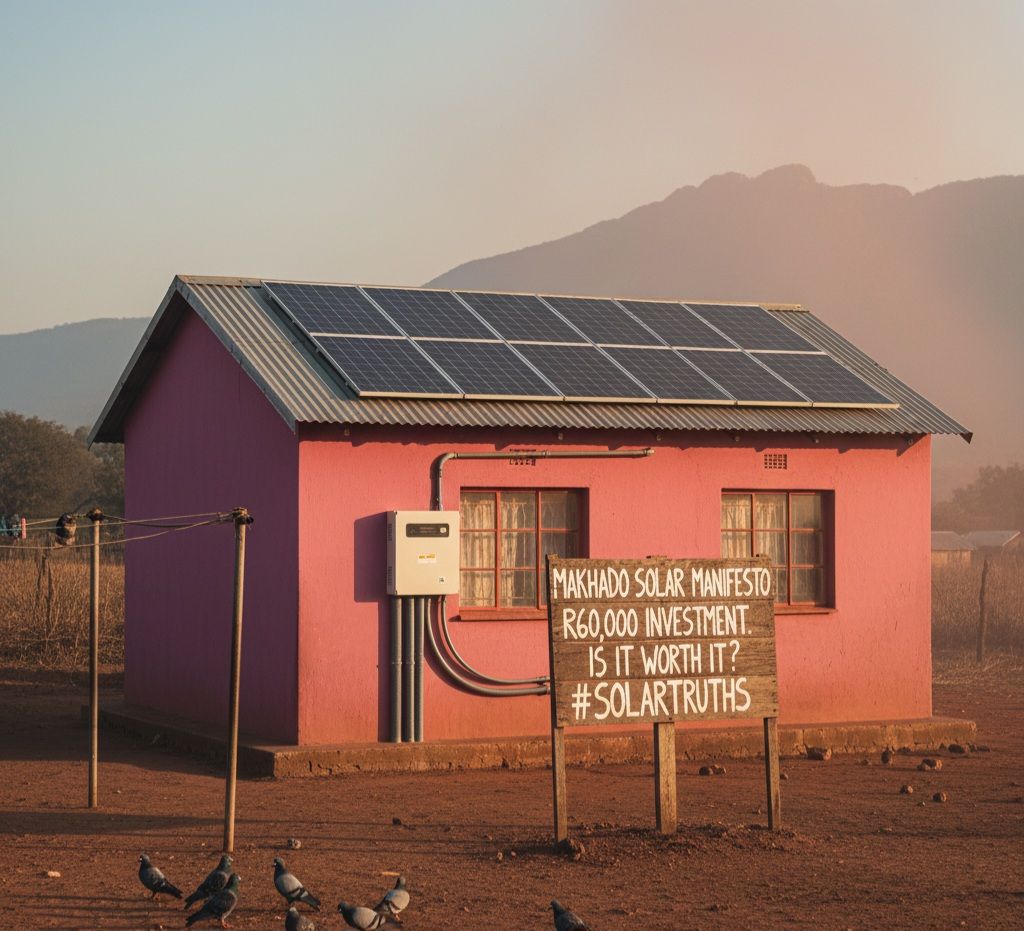
When I spent my money on a solar system for my modest four-room house in the Makhado Local Municipality, I thought I was making a simple investment in freedom. I imagined switching off the Eskom meter, waving goodbye to load shedding stress, and simply enjoying the Limpopo sun. But the gap between the sales brochure and the village reality is wider than the Soutpansberg mountains.
The 2026 Legal Landscape: The R6,052 Trap
Before we dive into the lies, every homeowner must know about the March 2026 Deadline. NERSA has mandated that all grid-connected systems must be registered. If you are in Makhado and haven’t registered your inverter, you are sitting on a potential R6,052 fine. This is a massive shift in policy that caught many of my neighbors off guard. Most installers in our area are not mentioning this because it requires an ECSA-registered engineer to sign off on your drawings, which costs extra money and time. If you ignore this, your R60,000 investment could result in a massive fine and your house being disconnected from the municipal grid entirely.
Lie #1: “You Will Be 100% Off-Grid, Guaranteed”
The pitch that claims zero electricity bills and complete freedom from Eskom is a technical lie masked as a dream, and it’s especially cruel for homeowners in smaller municipalities like Makhado. My bill dropped dramatically, yes, but zero is a myth. Firstly, you are still shackled by the fixed service charges. Our local municipality still charges a service or capacity fee that you cannot avoid. You could generate enough power to run a small factory, but you still pay that non-negotiable fixed fee every month.
To truly be 100% off-grid in a 4-room house, you need more than just 6 panels. You need a massive battery bank to survive the cloudy weeks of the Limpopo rainy season. Most installers sell you a “Hybrid” system, which means you are still tied to the umbilical cord of Eskom. In 2026, the cost of a unit of electricity in Makhado has risen so high—following the 15.62% tariff hike—that even if you use 10 units of Eskom power a month, your bill still feels heavy because of the “Network Access Fee.” To be truly free, you must physically cut the cable, which most municipalities make nearly impossible or legally complicated.
Lie #2: “The Installation is a Simple, Day-Long Affair”
This lie endangers your home, ruins your aesthetic, and creates a security risk. In my experience, a ‘simple’ install is often an excuse for corner-cutting. I was promised neat, hidden runs. The reality? Thick, grey plastic trunking is required, and on a smaller 4-room house, there’s nowhere to hide it. My cables are now exposed near the public road, which ruins the curb appeal of my home and the recent paint job. Worse than aesthetics, those exposed cables are a clear invitation to criminals who target copper.
My house has a metal (zinc) roof, which is very common here. The installers worked fast, but my biggest structural worry remains the long-term integrity of those anchor points. I fear that drilling into metal roofing will inevitably lead to leaks when the rainy season comes. A proper installation on a zinc roof requires Aluminum Rails and EPDM rubber gaskets. Many “cheap” installers skip the rails and screw the panels directly into the corrugated iron. This is a disaster because the heat in Limpopo causes the metal roof to expand and contract. Over time, those direct screws will tear the metal, creating “oval” holes that allow water to pour into your ceiling. Furthermore, a “day-long” affair usually means they skipped the Earthing Spike. Without a 1.2-meter copper rod hammered into the ground, your solar panels become a lightning magnet for the summer storms we get in the North.
Lie #3: “This System Requires Zero Maintenance”
This is a fantasy, especially under the hot, dusty Limpopo sun. The system might be technically under warranty, but managing it becomes part of your daily routine. In my area, we experience intense heat, and while we don’t often get strong winds, the sun bakes the panels daily. This means my maintenance is focused on efficiency loss due to persistent grime, haze, and the biggest culprit: bird droppings. Pigeons are the most annoying part. They don’t usually sit on the panels because the glass gets too hot, but they hang around the edges. Their acidic droppings etch the glass and reduce efficiency by 15% if left for even a month.
My biggest unique “maintenance” chore is the security check. While I might automatically know the system is working when the lights are on, I have to perform a dedicated weekly physical check of the roof and the battery area. This is primarily to inspect the battery enclosure for security breaches, but also to check for birds’ nests. Birds love the sheltered space under the panels, and their nesting material is a fire risk. This necessary weekly check is a direct cost of living in an area where security is paramount.
Lie #4: “Our Price is the Best—Compare It!”
When a quote is suspiciously cheap (say, R20,000 less than the local average), the installer is cutting corners somewhere that matters. As an electrical system user, I know the cheapest component can lead to the most dangerous failure. Thin, cheap DC cables will lead to overheating, but cheap breakers are a direct fire hazard. They are the system’s last line of defence. If the system fails to trip when the heat or current spikes, the breaker is supposed to sacrifice itself to save your home. If a cheap breaker is used, it will fail to respond and simply catch fire.
I chose the Pylontech US3000C battery for my home. In the village, where load shedding can last 4 hours or more, a cheap “Gel” battery will be dead in 6 months. Lithium-ion is the only technology that can handle the “Electricity Eaters” like your kettle or fridge without dying prematurely. However, even with a Pylontech, you must manage your load. If you turn on the kettle, the microwave, and the TV at once, your battery will “voltage sag,” and your lights will flicker—reminding you that you are now a Power Manager, not just a consumer.
Lie #5: “Load Shedding Will Be a Thing of the Past”
This is the cruelest lie because it sells you peace of mind, but what you actually buy is a new form of stress: power management. The worst pain point comes when Eskom’s normal load shedding schedule is interrupted. Where I live, the transformer in our area can sometimes be out of commission for three days before being fixed. That’s three days without grid power. If your solar system is sized merely to cover the typical 4-hour Stage 4 load shedding slot, it will not survive a 72-hour fault.
Having paid for my solar system, the most frustrating thing is the deep regret of not buying a bigger battery capacity. When the lights flicker during an unexpected, extended fault, I am forced to turn off appliances I paid the solar system to run. We have moved back to the “Firewood Pivot.” During peak load shedding hours or cloudy weeks, we use firewood for cooking and boiling water to save the battery for the fridge and security lights. This “cultural hybrid” approach is the only way to make a 3.5kWh battery survive a South African winter.
The Social Reality: The “Village Hub” Dilemma
There is also a social cost to having solar in a 4-room house in a village. When the power goes out, you are the only beacon of light. Neighbors will inevitably come over to charge their phones or power banks. While we want to be helpful members of our community, every phone plugged into your inverter is a withdrawal from your storage. During a 3-day transformer outage, you have to make the hard choice: do I charge my neighbor’s phone so they can call their family, or do I save that power to make sure my security alarm stays active through the night? This is a level of stress no sales rep mentions.
Final Verdict: Was it worth the R60,000?
Despite the lies and the maintenance, the answer is yes—but only because I did my homework. I hired a skilled technician who provided a Certificate of Compliance (CoC). Without that paper, my insurance would be void, and the upcoming 2026 Eskom audits would result in a massive fine. If you are planning an installation in the Makhado area, ignore the glossy brochures. Focus on the earthing, the mounting rails on your zinc roof, and the security of your battery cage. Solar is the future of South African villages, but only if we build it on the truth of our reality, not the lies of the sales pitch.